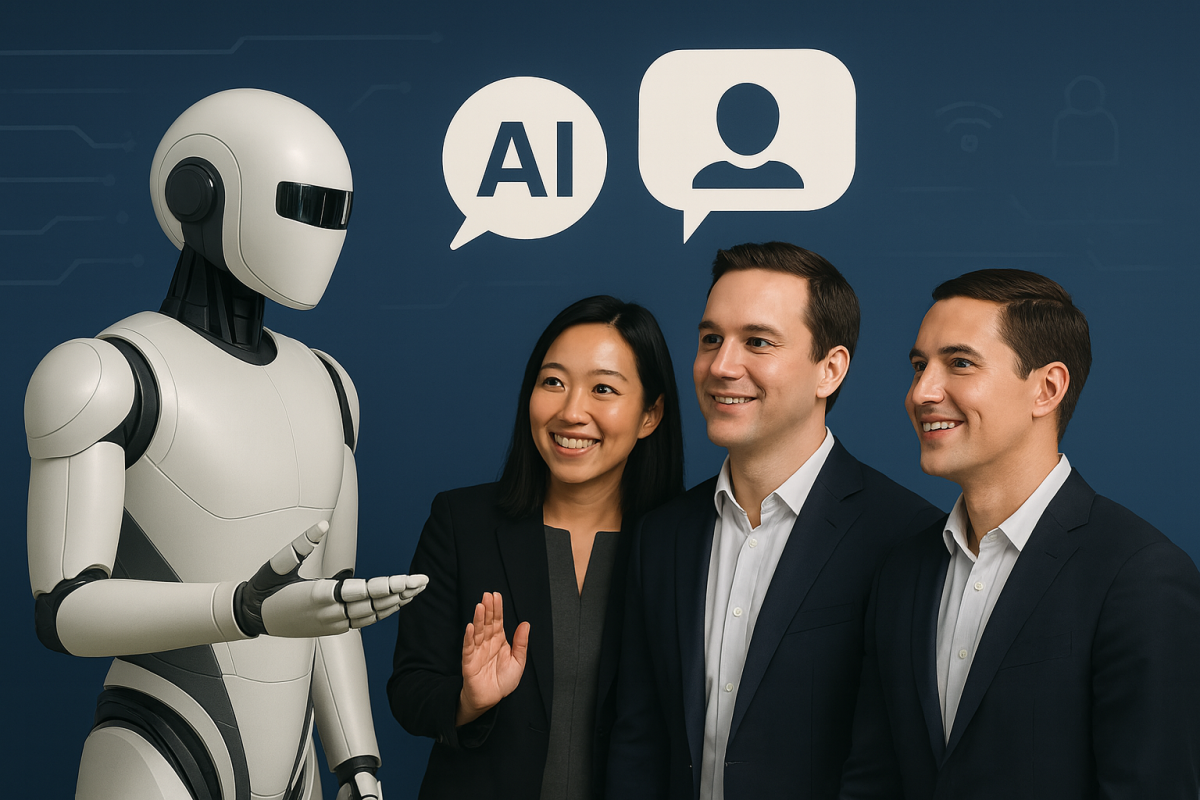
One thing is for certain, Artificial Intelligence (AI) capability is now being adopted at a very fast pace across ALL business functions. AI however has been around for decades, so what do we really mean when use the terminology AI in business today?
What we mean is ‘data driven’ AI, which in essence, is:
🤖 Generative-AI (AI that generates new context by learning patterns from existing data), and;
🤖 Agentic-AI (AI that can run through an entire sequence of events with minimal human intervention to achieve an outcome, again by learning from existing and real-time data).
So, how do we use this to make recruitment better, easier, and more cost effective?
Proceed with caution! Here are some of the reasons why:
✔️ AI may very well be an effective tool to screen entry level more volume based roles where CV’s per role available may run into their thousands
❌ For niche and senior level roles AI may be less effective and in many cases the right talent can be screened out before CV’s are even seen by a human
✔️ AI can be a helpful part in recruitment processes (for example in candidate interviews, interview scheduling, online testing)
❌ AI can make a Candidate Experience impersonal and cold; top talent is looking for a specific type of organisation, and not just a job for ‘jobs sake’
Cultural fit is as critical as technical ability when we move into hiring for senior leadership roles, and this is where it isn’t necessarily effective to have AI wholly accountable for decision making.
Getting a little deeper on the whole AI and human relationship, the Netflix documentary Coded Bias highlights some real perils around AI if not used and monitored correctly. You can watch the trailer here
If your organisation has a robust DE&I strategy then you may find one of our podcasts helpful:
🎙️ DE&I; Is your Talent Attraction process unconsciously creating bias? You can watch it here
Do we use AI at Gallop Executive? Of course we do! This is one of the many reasons we are able to be so flexible with our hiring and pricing models!
This is how we use AI:
📖 To format and create Candidate Reports for clients (using our own detailed notes; personal details are never input into ‘open AI’ systems)
📚 To format other documents such as search Calibration and Progress Reports
📔 To put together templates for bespoke Role Profiles to go out to candidates engaged in a search process
🔎 For targeted research and information gathering purposes
🖼️ To create images for our marketing initiatives
👤 To find candidate CV’s across our talent pools within our CRM system and our CV database
🖥️ Our CRM system (HubSpot) uses AI for many different time saving functionalities
This is how we do not use AI:
🚫 To screen out CV’s, at any stage; we do not believe that AI is capable just yet in elevating a Candidate Experience beyond our own intimate levels of candidate care so we like to keep the majority of the candidate management ‘bits’ personal
🚫 To create content; we are experts in our field and whilst AI may support us with the formatting of articles and reports, we would never rely on AI for factual information
🚫 Specific client or candidate information is never input and shared in to ‘open AI’ systems. Full stop
And this is what AI simply cannot do:
❌ Cherry pick talent having had detailed conversations with Hiring Managers around complex role requirements, then apply deep problem solving skills to identify what blend of skills, and who, may be a good match
❌ Build and nurture close and trusted client and candidate relationships
❌ Negotiate effectively throughout a recruitment search process and in particular at offer stage; manage counter offers; get close enough to a candidate to maximise successful outcome potential (and acceptance of an offer!)
As specialists in our areas of expertise and a proactive headhunting search firm, we do not tend to advertise roles in any case. We know where to go to get the right talent. We do not rely on the best talent coming to us.
So, in conclusion, using AI to do the heavy lifting and basic volume tasks is extremely handy. But we do not recommend that AI is given more than it is capable of.
We use AI to supplement our service proposition and increase quality, not to cut corners. As ever, if something works, do more of it; if it doesn’t, then it’s time to adapt and modify.
You can view and interact with post responses on LinkedIn here
